
The Main Repair Factors
- Roof repair cost depends on the damaged area, roof slope, working height, materials and the condition of the decking underneath.
- A small ceiling stain can require work beyond the visible mark because water may travel before reaching the room.
- A written scope separates the planned repair from additional work that needs your approval if opening the roof reveals damage.
The Work Behind Each Repair Line
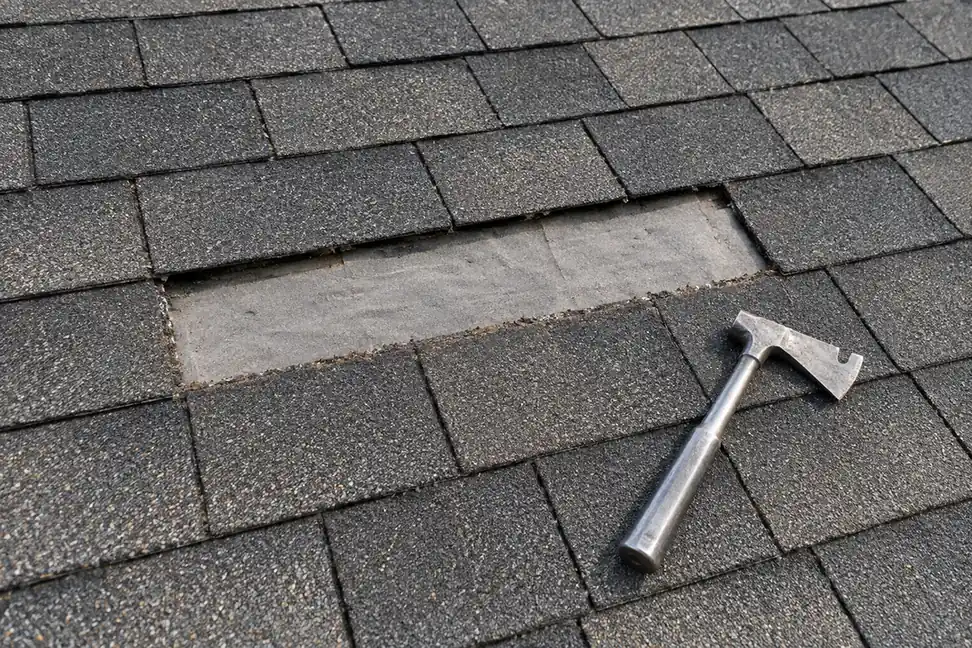
A repair scope should name the leak source, the materials being replaced and the boundaries of the work. The visible gap or stain helps start the conversation, but the roof assembly determines how much needs to come apart.
- Finding the entry point. Your roofer follows the signs of water toward the source and checks nearby joints or penetrations. The ceiling mark and the entry point may be in different places.
- Opening the repair area. Removing enough covering to reach the defect allows the repair to connect with sound material. Several covering layers or brittle surrounding shingles enlarge that task.
- Checking the decking. Decking is the wood base beneath the covering and underlayment. Wet or softened sections need separate attention because new roofing needs a sound fastening surface.
- Replacing the failed detail. The scope identifies a pipe collar, flashing, valley lining, exposed nail detail or worn shingles. Each requires a different combination of materials and access.
- Restoring the layers. Underlayment, covering and adjoining flashing must work together across the opened area. The scope should describe those connections rather than list only the visible replacement shingles.
- Finishing and clearing up. Material removal, loose fastener collection and protection of nearby surfaces belong in the work description. A necessary return visit should have a stated purpose, such as completing a detail after a matching part arrives.
The Cause Changes the Repair
The failed roof detail determines which materials and neighboring areas need attention. Pacific Northwest National Laboratory identifies roof penetrations as weak points in the water control layer, which is why a pipe collar can matter even when the surrounding shingles look intact.
| Repair type | What moves the price | What usually keeps it simple |
|---|---|---|
| Pipe collar | Pipe size, surrounding shingles and decking condition | One failed collar with sound material around it |
| Wall or chimney flashing | Length of the junction and access behind adjoining materials | A short, accessible joint with intact backing |
| Valley repair | Length of the affected channel and covering removed beside it | Damage confined to one identifiable section |
| Exposed nail detail | Number of affected fasteners and condition of nearby roofing | An isolated defect without broader deterioration |
| Worn or missing shingles | Repair area, shingle type and matching difficulty | Available material and flexible neighboring shingles |
| Decking repair | Extent of damaged wood and access to its supports | A clearly bounded area with sound framing |
Size, Slope and Access Affect the Work
Larger repair areas need more material, while steep slopes, extra height and restricted access change how your roofer reaches them. A porch, narrow side yard or landscaping can affect material handling even when the roof defect is small. Matching a discontinued shingle may also require a different repair boundary from matching a current product.
A roof repair cost estimator cannot see concealed wet wood or test whether adjacent shingles will separate without breaking. Use an online result to understand categories of work; the house still needs an assessment that identifies the actual defect.
A Small Defect and an Aging Roof Need Different Scopes
A localized failure surrounded by sound roofing supports a more limited repair than deterioration spread across several slopes. Repeated leaks, widespread cracking or shingles that break during careful removal can change the decision. Compare repair and replacement considerations when a repair would leave substantial deterioration beside the new work.
The written roof repair estimate should identify what is included and how newly exposed damage will be discussed. One of our local roofing partners discusses the repair boundaries and the price with you before work begins; added work needs a clear explanation and your approval.
The Call Starts With What You Can See
Call now and describe the stain's room and position, when dripping happens and the roof's approximate age if known. Photos taken from inside or the ground can help explain the pattern. An unknown roof age does not prevent the conversation.
Stay off ladders and the roof. From a safe spot beneath a small drip, place a bucket and move belongings away. Keep people clear of a bulging or sagging ceiling. Leave a light switch off when water is near the fixture, and describe the location without touching wiring.