
How it works
How Roofing Work Starts With Your Call
Call about a leak, worn shingles or a planned roof replacement in Florence. A local roofing professional takes the next step, starting with the symptoms and moving toward a roof assessment and a written description of the work.
Four Steps From Call to Walk-Around
- Start the conversation. Describe what the roof is doing and give the property address. You can call without measurements, photographs or an installation date.
- Discuss the job. One of our local roofing partners carries the request forward. Explain whether the concern is a particular leak, worn covering or a planned material change.
- Read each line. Your roofer examines the roof and discusses each scope line and its price before work starts. Materials, access and concealed conditions receive separate attention.
- Review the finish. The work follows the scope you approve. A final walk-around covers the completed sections, removal of discarded materials and cleanup around the house.
After the Call and During the Work
| Step | What happens |
|---|---|
| Describe the roof | Share the address and symptoms during the call |
| Discuss the request | Talk through the concern and the assessment |
| Review the scope | Read the proposed work and its price before approval |
| Check the finish | Walk around the completed work and review cleanup |
Describe the symptoms you already know
A description of the problem is enough to start the call. Tell the person answering where water appears, whether a stain returns or which section looks worn from the ground. Photos taken indoors or from the yard can help when handy. No preparation task needs to delay the conversation.
Carry the concern into the assessment
One of our local roofing partners takes the request forward using the property address and the issue you describe. Your roofer examines the roof's covering and connections, then relates the findings to the proposed work. If the visible stain is below a different entry point, the scope should explain that route.
Read the work before approving it
Your roofer walks through the scope and price before work begins, showing what each line covers and why it belongs. Several lines may be needed even for a small visible defect because roof layers and connections work together.
- Opening and decking. Removal exposes the affected layers so your roofer can assess the supporting deck. The scope describes the opening and how concealed deterioration will be brought to your attention.
- Materials and connections. Underlayment, drip edge, flashing, covering, vents and ridge details describe how the roof sheds water and connects at its edges. Roof pitch, material choice and access affect the work attached to those lines.
- Disposal and cleanup. Discarded material needs a loading and haul-off plan. The finish includes checking the work area for loose fasteners and reviewing the completed sections with you.
Keep the waiting area safe
Stay indoors or observe from the yard without climbing onto the roof or using ladders. Move belongings away from a drip and place a container beneath it only if the area is safe. Keep people away from any ceiling that sags or bulges. When water is near a light fixture, leave the switch off and avoid the fixture.
Review the completed scope together
The final walk-around connects the finished work to the items you approved. Your roofer identifies completed repairs or replacement sections, explains any agreed changes and discusses remaining items. Ask about an unclear line during that review so the written record describes the actual work.
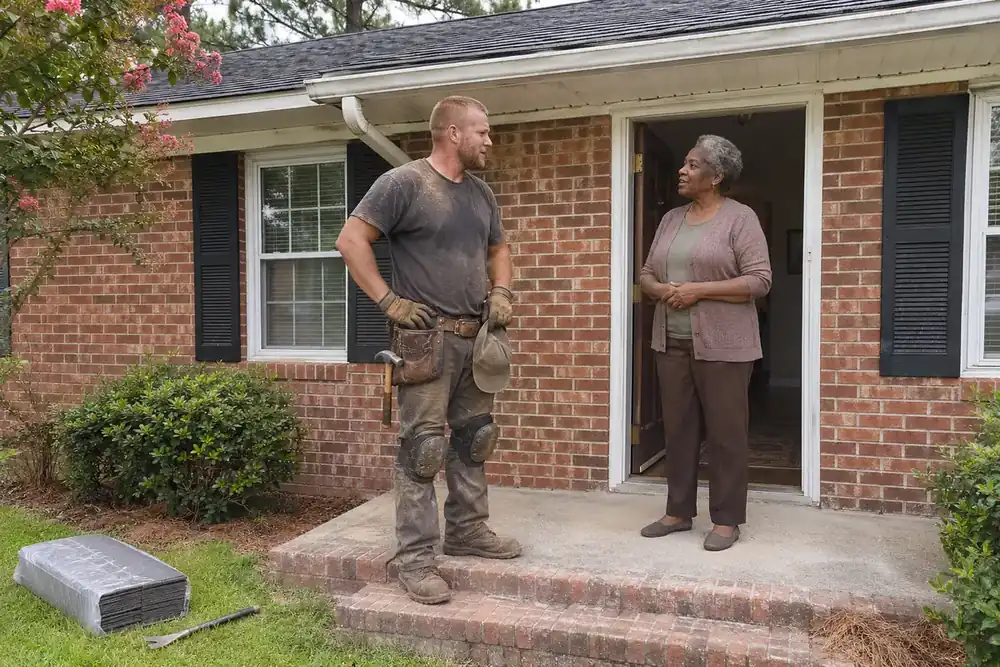
Call to describe the roof problem and start a clear conversation about the assessment, scope, materials and completed work.
Call (843) 919-0587