
Condition Sets the Direction
- A repair makes sense when the problem is limited and the surrounding roof can support a lasting connection.
- Replacement deserves consideration when wear extends across slopes, leaks have several causes or repairs would leave failing materials behind.
- The written scope should distinguish confirmed damage from concealed conditions and explain what stays, what changes and why.
Read the Roof From Surface to Decking
Start with the layers and remaining condition
Roof condition determines the useful scope; age and existing layers help explain how the roof reached that condition. An installation date is helpful when known, but a missing record does not prevent an assessment. Your roofer examines the covering, edges, penetrations and accessible underside for evidence that separates a local defect from broader wear.
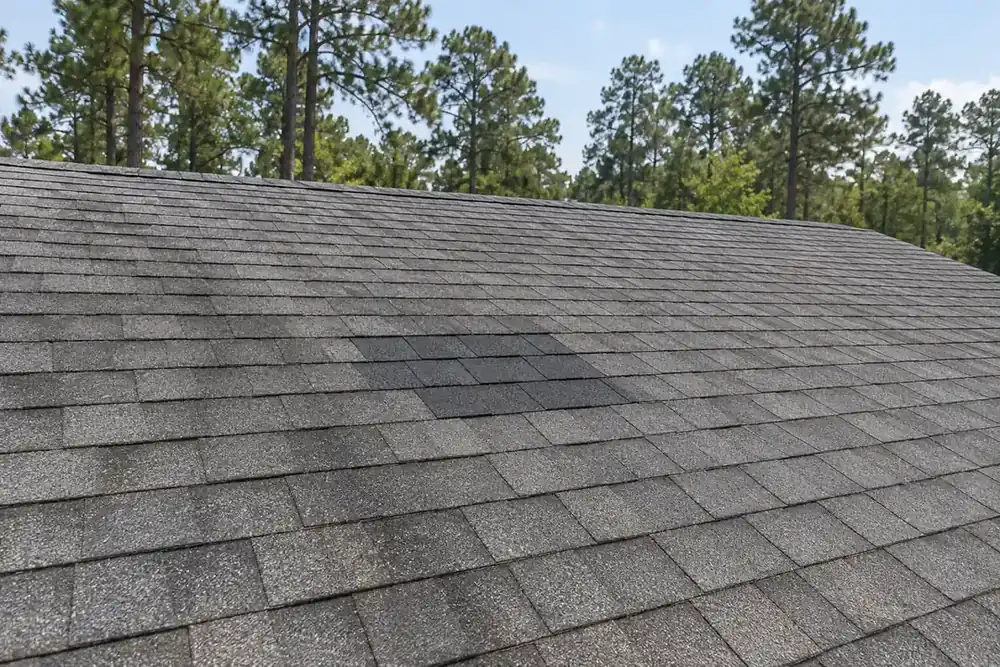
Deciding when to repair a roof starts with whether sound material surrounds the damaged area. Shingles that remain flexible enough for a proper tie-in may support a small repair. Brittle surrounding shingles, several deteriorated slopes or repeated failures can make a narrow scope less useful. An added layer also changes what can be seen without opening the roof.
Compare the findings across the whole roof
The location and spread of defects usually matter more than the size of a ceiling stain. Roof replacement vs repair is a comparison of what each approach resolves and what each leaves in place.
| What the roofer finds | Usually points to repair | Usually points to replacement |
|---|---|---|
| Shingle wear | A limited damaged section | Similar deterioration across several slopes |
| Leak sources | One identifiable entry point | Several failing details in different areas |
| Existing layers | Sound surrounding material for a tie-in | Layers that prevent a sound repair connection |
| Decking condition | Local damage that can be opened and replaced | Widespread deterioration requiring broad removal |
| Flashing condition | One defective connection with sound adjacent materials | Failing connections throughout the roof |
| Previous repairs | One isolated repair with stable surroundings | Recurring leaks beside multiple older patches |
These findings are starting points for discussion, rather than a diagnosis from the ground. Water can travel along framing before reaching the ceiling, so the visible stain does not identify the entry point by itself.
Read the scope line by line
A useful roof repair vs replacement comparison lists the actual work under each option. Each line should explain the material affected and the reason for opening or retaining it.
- Removal and access. A repair opens the affected section; replacement describes which slopes and existing layers come off. Roof pitch, access and the number of layers change the removal work.
- Decking condition. The deck supports the roof covering and its fasteners. The scope separates visible deterioration from concealed areas and explains how newly exposed damage will be documented.
- Water control. Underlayment provides a secondary layer beneath the covering, while flashing directs water at joints and penetrations. Drip edge addresses the roof perimeter; each connection needs a clear description.
- Covering and ventilation. The material line identifies the shingles or panels, matching limits and fastening approach. Vent and ridge details describe which components are renewed and how ventilation is addressed.
- Debris and finish. Removal includes carrying away discarded roofing and checking the work area for loose fasteners. The final review identifies completed sections and any work excluded from the scope.
Separate the immediate repair from later renewal
A staged plan addresses a defined defect now and records the remaining roof conditions for a later replacement decision. One of our local roofing partners will discuss the work included and its price before you authorize the chosen scope.
When weighing roof repair vs replacement cost, compare removal, decking, flashing, access and materials rather than treating both scopes as the same job. A repair may preserve usable roofing while leaving an older covering in place. The written plan should identify that limitation, the symptoms that warrant another assessment and any overlap with future removal work.
Keep the decision and the limits in writing
A written repair or replacement scope should identify the affected roof sections, retained materials, exclusions and the process for approving additional work. Photographs can support the description, especially where the deck cannot be assessed until the covering is removed.
Call while the problem is active or recurring; records and photographs are optional. Observe from indoors or the ground, without using a ladder. Move belongings away from a drip and use a bucket only where safe. Avoid a sagging ceiling, and leave a light switch off when water is near the fixture.